BMI Calculator by Age – Check Healthy Weight Guide
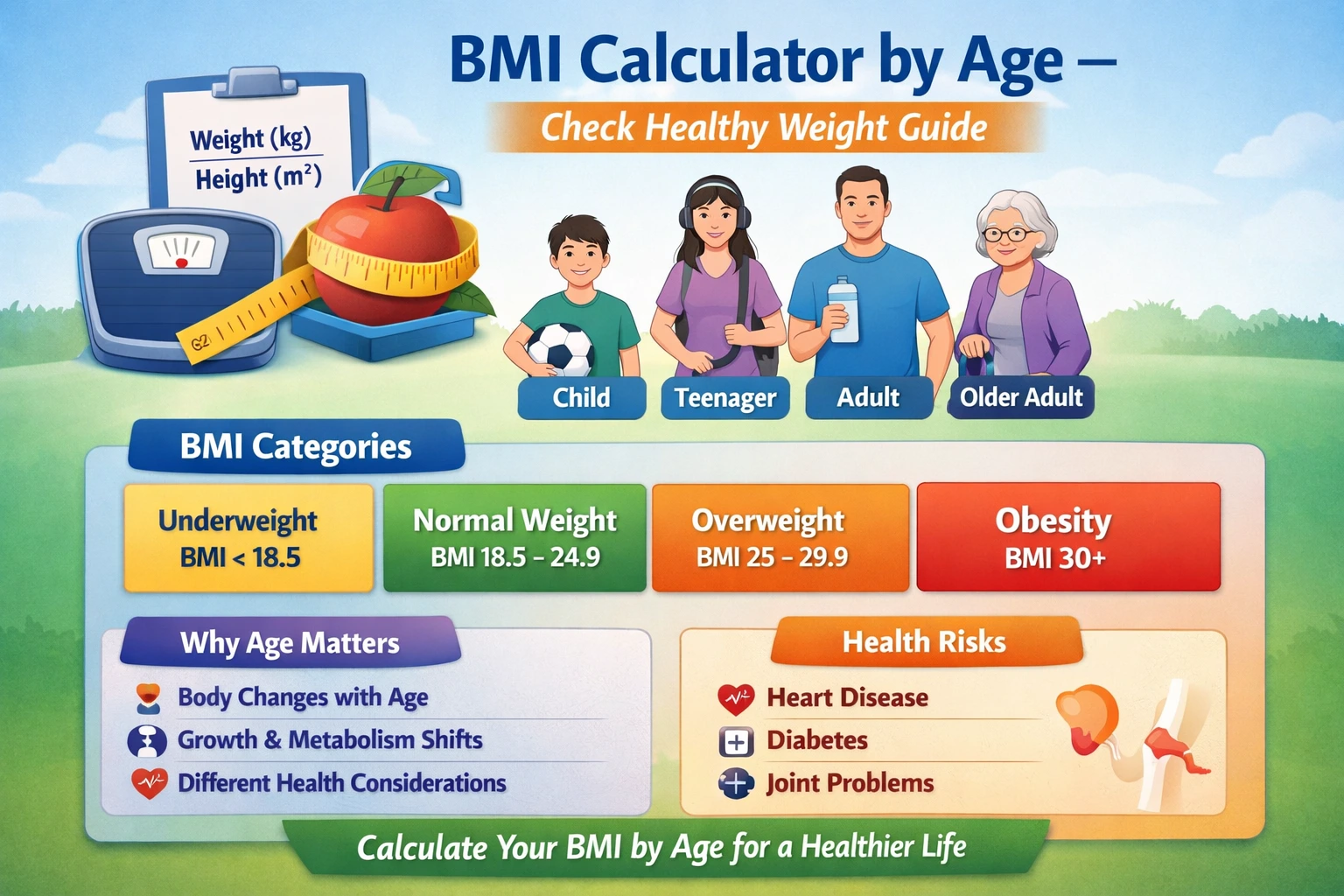
Body Mass Index, commonly known as BMI, is one of the most commonly used health indicators to evaluate whether a person’s weight is healthy for their height. It is widely used by healthcare professionals, nutritionists, and fitness experts to estimate body weight status and identify potential health risks related to underweight, overweight, and obesity.
Although BMI calculation is simple, interpreting BMI correctly requires understanding several important factors. One of the most important factors is age. As the human body grows and ages, metabolism, muscle mass, bone density, and fat distribution gradually change. These biological changes influence how BMI should be interpreted at different stages of life.
A BMI calculator by age helps individuals better understand their BMI results while considering their age group. This allows people to evaluate their body weight more accurately and make informed decisions about diet, exercise, and lifestyle habits.
Understanding BMI across different age groups can help prevent health problems, support long-term wellness, and improve overall quality of life.
What is Body Mass Index and Why It Matters
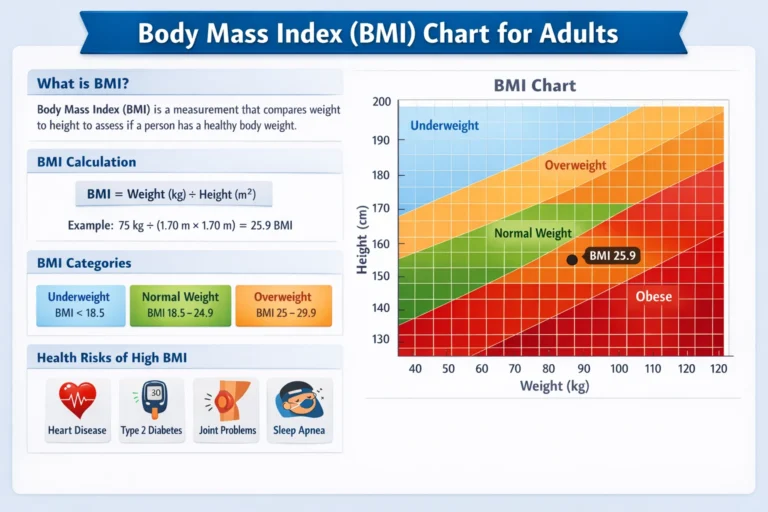
Body Mass Index is a measurement that compares a person’s weight to their height to determine whether their body weight falls within a healthy range. It is calculated using a mathematical formula that divides body weight by the square of height.
BMI Formula:
Weight (kg) ÷ Height (m²)
For example, if a person weighs 68 kilograms and has a height of 1.70 meters, the BMI is calculated by dividing the weight by the square of the height.
The result produces a numerical value that represents the person’s BMI. This value is then compared with standard BMI categories that classify individuals into weight groups.
Although BMI does not directly measure body fat percentage, it provides a useful estimate that helps identify potential health risks associated with abnormal body weight.
BMI is widely used because it is simple, quick to calculate, and requires only two measurements: height and weight.
Instead of calculating the formula manually, you can simply Check Your BMI Online using a reliable BMI calculator that instantly shows your BMI category and healthy weight range.
Why Age Should Be Considered When Evaluating BMI
Age plays a significant role in body composition and metabolism. The body changes continuously throughout life, and these changes affect how BMI values should be interpreted.
During childhood and adolescence, the body grows rapidly. Height increases quickly, and body composition shifts as muscle and fat levels change.
During adulthood, metabolism stabilizes but may gradually slow down depending on lifestyle factors such as diet, physical activity, and stress levels.
In older adulthood, muscle mass decreases while body fat percentage may increase even if total body weight remains stable.
Because of these differences, BMI interpretation may vary across age groups. A BMI calculator by age helps provide a clearer picture of health by considering these natural biological changes.
BMI Classification and Standard Weight Categories
BMI values are grouped into categories that help determine weight status. These categories are used worldwide by health organizations such as the World Health Organization (WHO) and the Centers for Disease Control and Prevention (CDC).
The common BMI categories include:
Underweight – BMI below 18.5
Normal weight – BMI between 18.5 and 24.9
Overweight – BMI between 25 and 29.9
Obesity – BMI 30 or higher
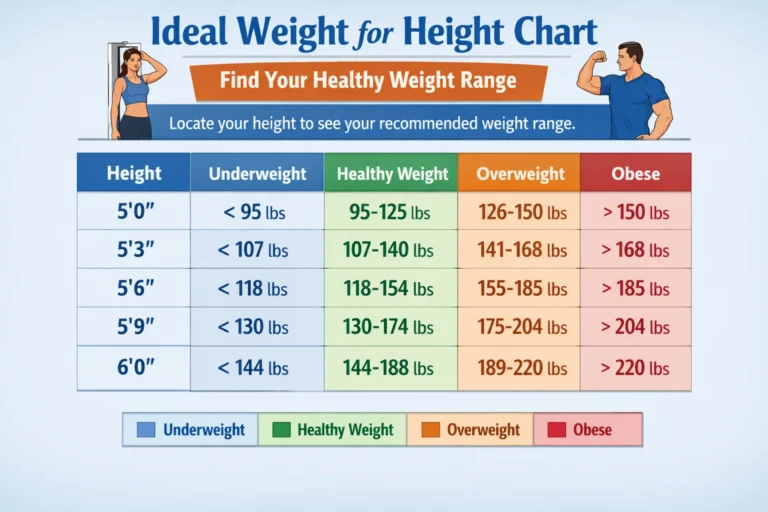
Individuals whose BMI falls within the normal range are generally considered to have a healthy balance between height and body weight.
Maintaining BMI within this range can help reduce the risk of several health conditions such as cardiovascular disease, diabetes, and metabolic disorders.
However, these categories should always be interpreted in the context of age, lifestyle, and body composition.
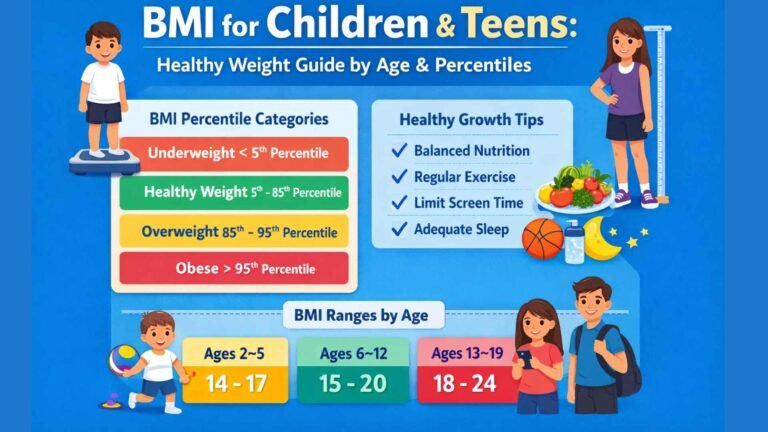
BMI for Children and Growth Development
Children are constantly growing, and their body composition changes as they develop. Because of this, BMI evaluation for children is different from adults.
Instead of fixed BMI ranges, healthcare professionals use BMI percentiles based on age and gender. These percentiles compare a child’s BMI with others in the same age group.
Children who fall within the middle percentiles usually have healthy body weight. Children above higher percentiles may be considered overweight, while those below lower percentiles may be underweight.
Monitoring BMI during childhood is important because early weight patterns often influence long-term health outcomes.
Encouraging healthy eating habits, physical activity, and balanced nutrition helps children maintain healthy BMI values as they grow.
BMI During Teenage Years and Adolescence
Teenage years are marked by rapid physical development. During puberty, the body experiences significant hormonal changes that influence growth, muscle development, and fat distribution.
BMI may fluctuate during adolescence due to growth spurts and hormonal changes. Therefore, BMI percentiles remain the most reliable method for evaluating weight status in teenagers.
Teenagers who maintain active lifestyles and balanced diets are more likely to develop healthy BMI patterns that continue into adulthood.
Sports participation, outdoor activities, and proper nutrition play an important role in supporting healthy body composition during adolescence.
BMI for Adults and Lifestyle Influence
In adulthood, BMI categories become standardized. Adults use fixed BMI ranges to determine whether their weight falls within healthy limits.
Many lifestyle factors influence BMI during adulthood, including diet quality, physical activity levels, work routines, and sleep patterns.
Sedentary lifestyles and poor dietary habits can lead to gradual weight gain over time. Monitoring BMI regularly allows individuals to detect weight changes early and make necessary adjustments.
Maintaining healthy BMI during adulthood requires balanced nutrition, regular exercise, adequate sleep, and stress management.
Adults who prioritize healthy habits often experience improved energy levels, better metabolism, and reduced risk of chronic diseases.
BMI for Older Adults and Aging Body Changes
As people grow older, the body naturally undergoes several physiological changes. Muscle mass gradually decreases, a process known as sarcopenia, while body fat distribution may increase.
Metabolism may also slow down, making it easier to gain weight even with similar calorie intake.
For older adults, BMI interpretation should consider overall health, mobility, muscle strength, and nutritional status.
In some cases, slightly higher BMI values may not pose the same health risks as they do in younger adults.
Maintaining moderate physical activity and balanced nutrition can help older adults maintain healthy body weight and improve overall quality of life.
Health Risks Linked to High BMI
Excess body weight can significantly increase the risk of several health problems. High BMI is associated with conditions such as heart disease, high blood pressure, type 2 diabetes, and joint disorders.
Excess fat accumulation may also contribute to metabolic syndrome, which increases the risk of cardiovascular disease and other chronic illnesses.
Maintaining BMI within a healthy range helps reduce these risks and supports long-term health.
Regular physical activity and balanced diet are essential for preventing weight gain and maintaining healthy BMI levels.
Health Risks Associated with Low BMI
While high BMI is often discussed, extremely low BMI can also cause health concerns. Individuals with very low BMI may experience fatigue, weak immunity, nutritional deficiencies, and reduced bone density.
Low BMI may also indicate insufficient calorie intake or underlying health conditions.
Maintaining balanced nutrition ensures that the body receives essential nutrients required for proper functioning.
Healthy BMI levels support stronger immunity, better energy levels, and improved physical health.
Healthy Lifestyle Habits for Maintaining Balanced BMI
Maintaining a healthy BMI requires consistent lifestyle habits. Proper nutrition, regular physical activity, and balanced daily routines play an important role in weight management.
A healthy diet should include fruits, vegetables, whole grains, lean proteins, and healthy fats. These foods provide essential nutrients that support metabolism and overall health.
Regular exercise helps burn calories, maintain muscle mass, and improve cardiovascular health. Activities such as walking, cycling, swimming, and strength training can help maintain healthy body weight.
Adequate sleep is another important factor because sleep affects hormones that regulate hunger and metabolism.
Stress management techniques such as meditation, relaxation exercises, and outdoor activities also contribute to maintaining balanced body weight.
Limitations of BMI and Additional Health Indicators
Although BMI is widely used, it has certain limitations. BMI does not distinguish between muscle mass and fat mass. Individuals with high muscle mass may have higher BMI values even though they are healthy.
BMI also does not account for differences in body composition, bone density, or fat distribution.
Because of these limitations, healthcare professionals often use additional measurements such as waist circumference, body fat percentage, and metabolic health markers to evaluate overall health.
Despite these limitations, BMI remains a practical and useful tool for identifying potential weight-related health risks.
Conclusion
A BMI calculator by age provides valuable insight into body weight in relation to height and different stages of life. While the BMI formula remains the same for everyone, interpretation may vary depending on age, body composition, and lifestyle habits.
Understanding BMI across age groups allows individuals to monitor their weight more effectively and take proactive steps toward healthier living.
By combining BMI awareness with balanced nutrition, regular exercise, and healthy daily habits, individuals can maintain healthy body weight and reduce the risk of chronic diseases throughout their lives.