BMI Calculator for Men – Complete Guide to Body Mass Index and Healthy Weight
Maintaining a healthy body weight is essential for overall health, physical fitness, and disease prevention. Many men want to understand whether their body weight is appropriate for their height and lifestyle. One of the most common methods used to evaluate this is the Body Mass Index, widely known as BMI.
A BMI calculator for men is a simple tool that helps estimate whether a person’s weight falls within a healthy range. It compares height and weight to determine if an individual is underweight, normal weight, overweight, or obese. Health professionals around the world use BMI as a basic screening method to identify possible health risks related to body weight.
Although BMI does not directly measure body fat percentage, it provides a quick and practical way to understand body weight status. By using a BMI calculator, men can gain valuable insights into their health and make informed decisions about diet, exercise, and lifestyle habits.
This detailed guide explains how BMI works, how men can calculate their BMI, what the BMI categories mean, and how to maintain a healthy weight.
What is Body Mass Index (BMI)?
Body Mass Index is a measurement that evaluates the relationship between a person’s height and weight. It was developed as a statistical method to assess body weight patterns in populations and is now widely used as a health screening tool.
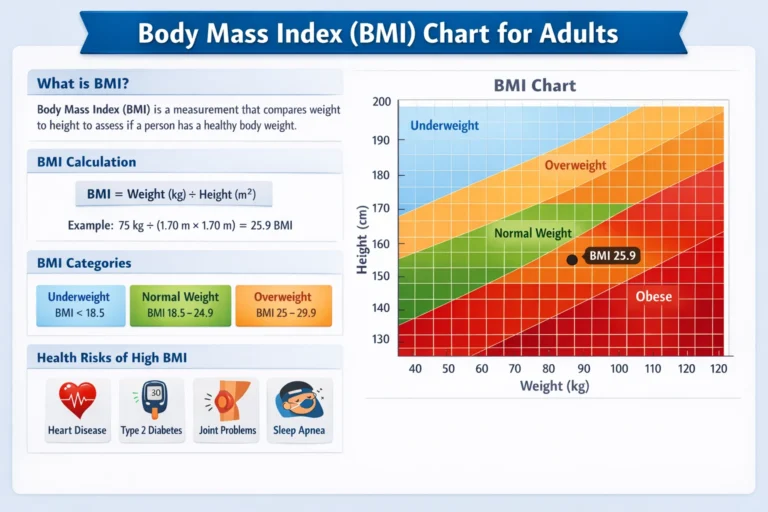
BMI works by dividing body weight in kilograms by the square of height in meters. The resulting number indicates whether a person’s body weight is within a healthy range.
The BMI formula is:
BMI = Weight (kg) ÷ Height (m²)
For example, if a man weighs 78 kilograms and his height is 1.75 meters, the calculation would be:
78 ÷ (1.75 × 1.75) = 25.4
This result indicates that the individual falls within the overweight category according to standard BMI classifications.
Although BMI is not a perfect indicator of body fat, it provides a reliable estimate that helps health professionals identify potential weight-related health risks.
Why BMI is Important for Men’s Health
BMI plays a significant role in helping men understand their overall health status. Maintaining a healthy BMI can reduce the risk of several chronic diseases and improve long-term well-being.
Men with a high BMI are more likely to develop health conditions such as heart disease, high blood pressure, type 2 diabetes, and metabolic syndrome. Excess body weight can also lead to joint problems, reduced mobility, and sleep disorders.
On the other hand, men who are underweight may experience nutritional deficiencies, low energy levels, and weakened immune function.
Monitoring BMI regularly allows men to identify whether their weight may pose potential health risks. When combined with healthy habits such as balanced nutrition and regular exercise, maintaining a healthy BMI can contribute to better cardiovascular health, improved physical performance, and increased energy levels.
BMI Categories for Adult Men
To help interpret BMI results, health organizations have established standard BMI ranges that classify weight status. These categories provide a general guideline for determining whether a person’s body weight is within a healthy range.
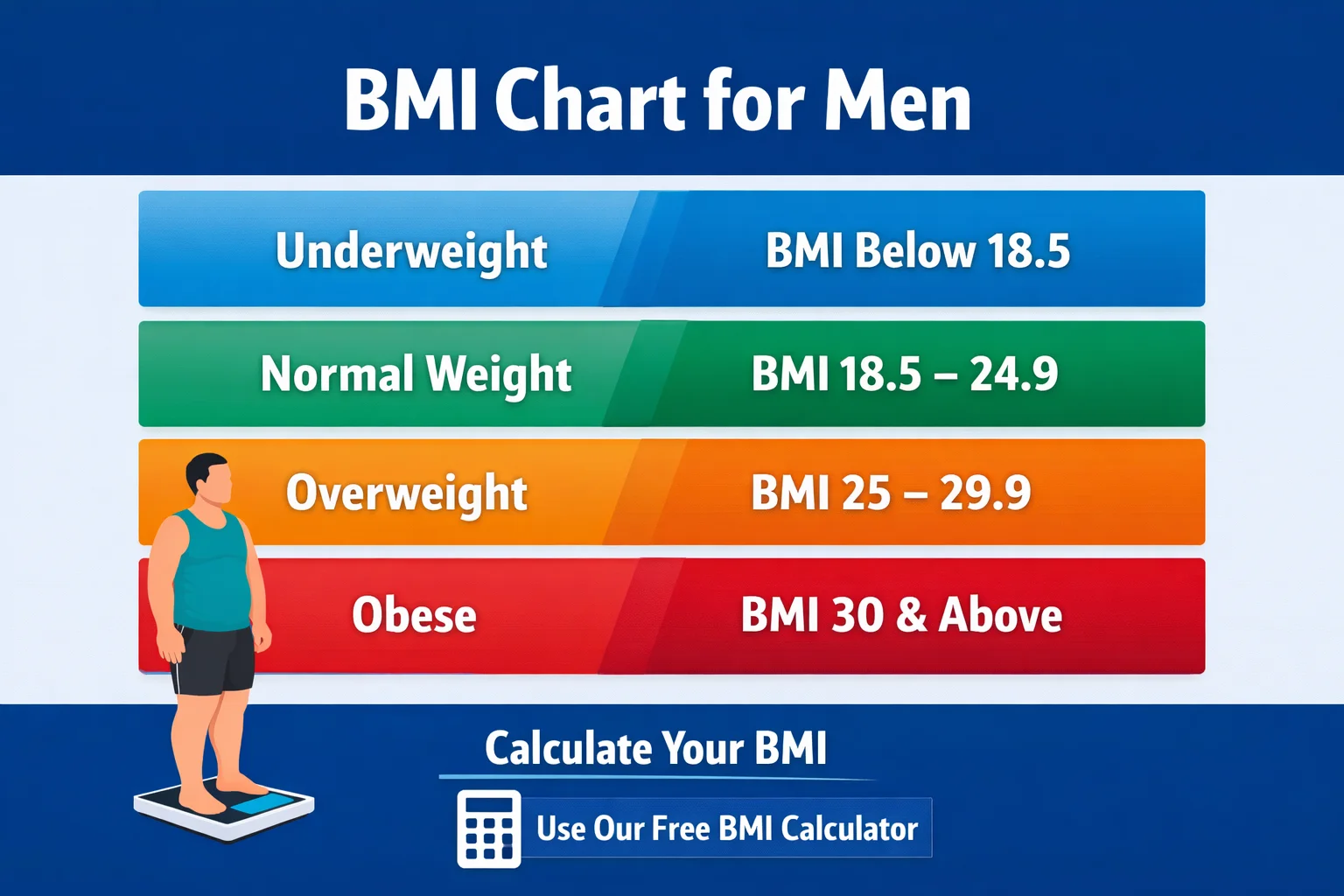
The commonly used BMI categories are:
Underweight – BMI below 18.5
Normal weight – BMI between 18.5 and 24.9
Overweight – BMI between 25 and 29.9
Obesity – BMI 30 or higher
Men who fall within the normal BMI range typically have a healthy balance between height and weight. This range is associated with lower risks of many health conditions.
Individuals whose BMI falls in the overweight or obese categories may benefit from lifestyle changes such as improved diet, increased physical activity, and weight management strategies. Those who are underweight may need to focus on increasing calorie intake through nutritious foods and building muscle mass through strength training.
How to Calculate BMI for Men
Calculating BMI is a straightforward process that requires only two measurements: body weight and height. Weight should be measured in kilograms, while height should be measured in meters.
The first step is to multiply height by itself to obtain the squared height value. After that, body weight is divided by the squared height to calculate the BMI value.
For example, if a man weighs 70 kilograms and his height is 1.72 meters, the BMI calculation would be:
70 ÷ (1.72 × 1.72) = 23.7
This result falls within the normal BMI category.
Although the calculation is simple, many people prefer to use an online BMI calculator. These tools allow users to instantly determine their BMI by entering their height and weight, making the process quick and convenient.
Ideal BMI Range for Men
The ideal BMI range for most adult men is between 18.5 and 24.9. This range is considered healthy because it reflects a balanced relationship between body weight and height.
Men within this range generally have a lower risk of developing chronic diseases related to excess body weight. Maintaining a healthy BMI can also improve energy levels, physical endurance, and overall quality of life.
However, BMI may not always perfectly reflect body composition. Men with high muscle mass, such as athletes or bodybuilders, may have a higher BMI even though they have low body fat levels.
For this reason, BMI should be interpreted alongside other health indicators such as waist circumference, body fat percentage, and overall fitness levels.
Limitations of BMI for Men
Despite its usefulness, BMI has several limitations. One of the main limitations is that BMI does not distinguish between muscle and fat. As a result, individuals with high muscle mass may have a high BMI even though they are physically fit.
BMI also does not account for factors such as age, bone density, or body fat distribution. For example, older adults may experience changes in body composition that BMI cannot fully capture.
Additionally, BMI may not always accurately reflect health risks for certain populations. For this reason, healthcare professionals often use BMI alongside other measurements such as waist-to-hip ratio, body fat percentage, and medical history.
Even with these limitations, BMI remains a valuable screening tool that provides a quick and accessible way to assess body weight.
Healthy Lifestyle Tips to Maintain a Good BMI
Maintaining a healthy BMI requires consistent lifestyle habits and a balanced approach to nutrition and physical activity. Men who prioritize healthy routines can effectively manage their body weight and reduce the risk of chronic diseases.
A balanced diet that includes fruits, vegetables, lean proteins, whole grains, and healthy fats provides essential nutrients while supporting weight management. Reducing the consumption of processed foods, sugary beverages, and high-calorie snacks can also help maintain a healthy weight.
Regular physical activity plays a crucial role in maintaining a healthy BMI. Activities such as walking, jogging, cycling, swimming, and strength training help burn calories and improve metabolism.
Adequate sleep is another important factor. Poor sleep patterns can disrupt hormones that regulate hunger and metabolism, leading to weight gain.
By adopting healthy lifestyle habits, men can maintain a stable BMI and support long-term health and wellness.
Conclusion
A BMI calculator for men is a simple and effective tool for understanding body weight and overall health. By comparing height and weight, BMI provides an estimate of whether a person’s body weight falls within a healthy range.
Although BMI is not a perfect measurement of body fat, it remains one of the most widely used indicators for evaluating weight status. Monitoring BMI regularly can help men stay aware of their health and take proactive steps to maintain a healthy lifestyle.
Combining BMI monitoring with proper nutrition, regular exercise, and healthy habits can significantly improve long-term health outcomes and overall quality of life.